Author: Margaret Wetter

  • Sustainable Ballard Annual Meeting – Jan 12

    Sustainable Ballard Annual Meeting – Jan 12

    All are Welcome!

    Please join us for our 2022 Annual Meeting ~

    Date:  Wednesday, January 12th, 2022

    Time:  7:00pm – 9:00pm

    Location:  Virtual via Zoom
    RSVP here to receive your video or phone in instructions

    Agenda:

    • Welcome and 2021 accomplishments
    • Review of SB projects, including:
      • Tool Library re-opening
      • DEI Taskforce work
      • New Solidarity project
      • Introducing new Little Free Libraries lead
    • Board membership
    • Thank you’s

    This is a great opportunity to learn more about Sustainable Ballard projects, get to know Board Members and Project Leads, see a snapshot of our 2021 accomplishments and financial picture AND if you are considering applying for a position on the Sustainable Ballard Board, this will be a great time to learn more about what that means.

    Please join us!

  • Are you Amazon-ing more? Support Sustainable Ballard!

    Are you Amazon-ing more? Support Sustainable Ballard!

    Give Back While You Shop.

    You shop. Amazon gives. 

    Even while shopping from home you can support Sustainable Ballard. Amazon will donate 0.5% of the price of your eligible purchases to Sustainable Ballard whenever you shop on AmazonSmile.

    AmazonSmile is the same Amazon you know. Same products, same prices, same service. Now, without changing your shopping habits, you can  support Sustainable Ballard.

    To sign up: go here and log into your Amazon account. 

    Remember each time you shop on Amazon, be sure to go to smile.amazon.com and part of your purchase price will be given to us.  Easy, peasy, right?

  • Storing Produce for a Rainy Winter Day

    Storing Produce for a Rainy Winter Day

    From Seattle Public Utilities “At Your Service” blog post:

    Beans are popping, tomatoes are starting to ripen, and zucchini is threatening to take over your neighborhood. Whether you’re growing your own, shopping at your local grocery store or farmers market, the variety of seasonal produce is hard to miss! 

    This is a great time to save and store fruits and veggies for the dark days of January, when you could use a reminder of warm summer days. Here are a few ways to save a little summer for later, and store extra food you have all year long. 

    Meet Your New Best Friend, Your Freezer

    Freezing foods at the peak of freshness maintains that sweet incredible flavor, and it’s a pretty quick process. Freezing summer produce means you can enjoy it anytime, and even have something at the ready to add to your smoothie or stir fry. This Freezer Storage Guide has all the details on how to put all kinds of foods on ice.   

    Here’s a quick list of a few things to get you started: 

    Quick Freeze – Herbs, some fruits, and even some vegetables can go straight from your counter top to the freezer without cooking. Quick and easy. 

    Quick Cook – Most vegetables (like peas, green bean, and squash) require blanching, a quick dip in boiling water – then a dunk in an ice bath, to prevent them from spoiling. It also preserves texture, color, and nutrient content. One more step, but so worth it to have sweet, crisp green beans in February. 

    Cook then Chill – Sauces, jams, and purees you cook up will keep in your freezer for a long time.  All those blackberries you’ve picked or splurged on are perfect for blackberry freezer jam.

    Put a Lid on It – Canning 

    Canning allows you to store foods without refrigeration or freezing.  While it is more involved than freezing, it is a great way to store a lot of food that could last you well into the winter.  You want to make sure you do this right for food safety, maximizing taste, and shelf life.  Never fear, there are a lot or resources to get you started and help you along the way. 

    Check out Tilth Alliance for classes on canning and food preservation. 

    Whichever method you choose for saving some of summer’s bounty now, it’s a great way to enjoy more variety all year long and save a little money while you’re at it. For more ways to make food last longer, check out Love Food Stop Waste

    To have SPU’s Curb Waste E-Newsletter delivered directly to your in-box, sign up here.

  • Leave the Leaves!

    Leave the Leaves!

    But not in the street.

    From the National Wildlife Federation blog: GARDEN HABITATS

    Authored by: DAVID MIZEJEWSKI  

    Leave the Leaves for Wildlife

    You shouldn’t feel obligated to rake up every last leaf in your yard this fall.  Leave leaves on the ground — they have a lot of benefit to wildlife and your garden.  Below are some tips on how to minimize the time you spend raking and maximize the benefit to wildlife and the greater environment that fallen leaves offer.

    Just let leaves stay where they fall. A leaf layer several inches deep is a natural thing in any area where trees naturally grow. The leaf layer is its own mini ecosystem!  Many wildlife species live in or rely on the leaf layer to find food and other habitat, including salamanders, chipmunks, box turtles, toads, shrews, earthworms, many insects species.

    Many butterfly and moth species overwinter as pupae in leaf litter. If you rake up and throw away all of your leaves this fall, you’ll be getting rid of these beneficial and often beautiful insects too. Remember, butterfly and moth caterpillars are a critically important food source for birds in the spring when they are feeding their babies. If you remove of all the pupae with your leaves in the fall, there will be fewer of these insects in and around your yard in in spring.

    From a gardening perspective, fallen leaves offer a double benefit. Leaves form a natural mulch that helps suppress weeds and at the same time fertilize the soil as they break down. Why spend money on mulch and fertilizer when you can make your own?

    What to do With Fallen Leaves

    If you must rake up your leaves, don’t throw them in the trash.  Compost them or drop them off at a municipal recycling center so they can be turned into compost that you and other members of your community can use in the spring. Some communities even offer curb side pick up of leaves specifically for municipal composting operations.

    Avoid leaf blowers. They are loud and create noise pollution and rely on fossil fuels which pollute our air and contribute to global climate change. Use a rake instead. You’ll be able to hear the chirping of birds and other natural sounds while you’re working, plus you’ll get some good exercise!

    If you just want a tidy look in your yard, or need to maintain one to comply with Home Owners Association rules, you can rake leaves off the lawn but still use them as mulch in your planting beds.  Put them in a big trash can and then shred them with a weed whacker to break them down into a finer textured mulch.

    Remember, the less time you have to spend doing the back-breaking work of raking up your leaves, the more time you have to enjoy the gorgeous fall weather outside and the wildlife visiting your garden!

    Autumn is a fantastic time to make your yard wildlife-friendly by adding food, water, cover and a place for animals to raise their young!

  • Vaccinate Your Bike

    Vaccinate Your Bike

    From our friends at Bike Happy

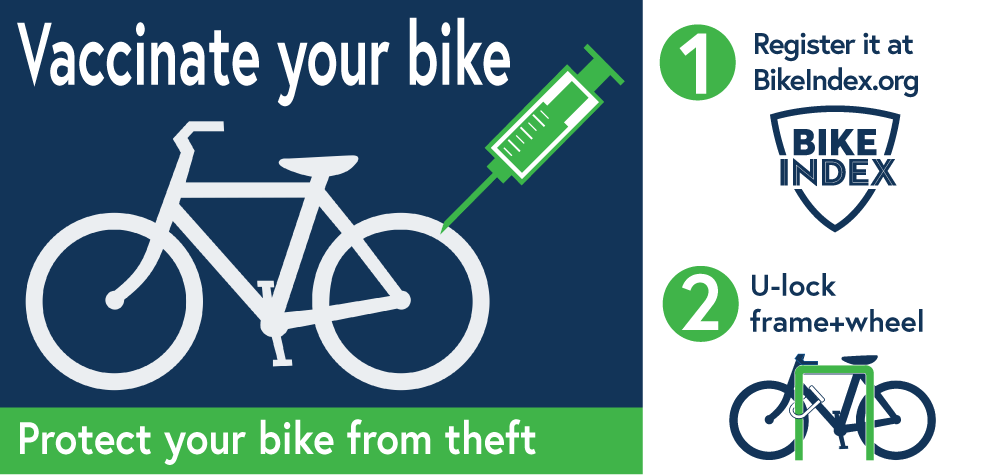
    Every year, a bike theft epidemic rages from May through October, claiming thousands of bicycles in Seattle.

    If your bike is ever stolen, you will need a record of its serial number, a description, and photos — and a community of caring people looking out for your bike. That’s what Bike Index provides.  It’s independent, free, and easy.

    More than 70% of returned stolen bikes in Seattle is thanks to Bike Index.  If enough bikes get registered, we can both recover more bikes and prevent the bike theft epidemic. List your bike on BikeIndex.org.

  • Reduce Food Waste

    Reduce Food Waste

    Make Your Food Last Longer Between Grocery Trips

    Why is waste so important to sustainability? Because everything has to go somewhere. Our “waste” is quickly consuming the planet, when so many products could be reduced, repaired, reused or recycled. We used to think we could just throw things away. We now realize there is no “away!”

    Here’s a great article from the new Seattle Public Utilities Curb Waste E-Newsletter:

    Ways to Store Your Food to Make it Stay Fresh Longer  

    Where and how you store food can make a big difference in how long it lasts.

    • Store fruits and vegetables away from each other since fruits make vegetables go bad faster
    • Store milk and eggs in the back of the fridge where it’s coldest, instead of in the door where it’s warmest.
    • Use SPU’s Food Storage Guide to decide where and how to store your fresh food.

    Use Your Freezer 

    • Frozen fruits and vegetables are just as nutritious as fresh produce. Stock up at the store or freeze your own fresh produce.
    • The freezer can also help your bread, herbs, meat, fish, and cooked foods last longer.
    • The sooner you get food in the freezer, the fresher and more nutritious it will be when you eat it later.
    • Download SPU’s Freezer Storage Guide for tips and step-by-step instructions.

    Organize Your Fridge  

    Stocking up on food means a very full fridge and freezer. This can lead to food going bad because you don’t see it.

    • Organize your fridge so new groceries are behind the old and food that goes bad quickly is in clear view.
    • Store cooked foods in clear containers so you can see what needs to be eaten and label your frozen foods with the date and contents.
    • Create an “Eat First” area for food that needs to be eaten soon.

    Understand Date Labels 

    • With the exception of infant formula, the date labels on food products — ”sell-by,” “best-by,” “use-by” — don’t indicate the safety of food.
    • Date labels are suggestions by the manufacturer for when they believe the food is at its freshest and tastiest, not when it is unsafe to eat. 
    • Get to know your food date terms and you’ll avoid throwing away perfectly good, edible food.

    Learning how to make food last longer will reduce trips to the grocery store, and save you money! Learn more tips at Love Food Stop Waste.

  • Stop Your Junk Mail!

    Stop Your Junk Mail!

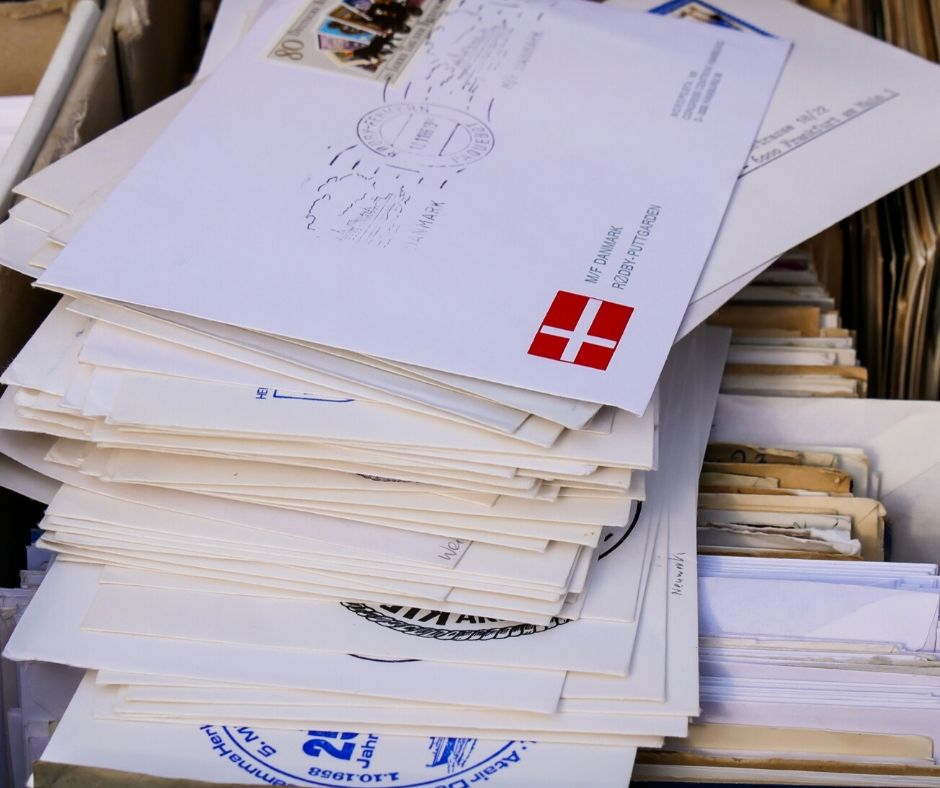
    If you haven’t already, now is a great time to stop all of those uninvited catalogs and advertisements piling up in your mailbox! A small investment in time can save you a lot more in the long run. The average person in the U.S. spends eight months in a lifetime dealing with junk mail. That’s a lot of wasted time, not to mention all the wasted trees, water and energy that go into making unwanted mail.

    One option for stopping unwanted junk mail is using the free opt-out service provided by Catalog Choice. Go to Catalog Choice and sign up. Each time you’re bugged by unwanted junk mail, sign-in to Catalog Choice and enter the company name and stop that junk mail. You can also use the site to stop phone books. Signing up for the Catalog Choice service won’t stop all your junk mail so they recommend also signing up for DMA Choice too.

  • Claim Your Adopted Street!

    Claim Your Adopted Street!

    From Seattle Public Utilities:

    Keep Seattle streets litter-free. Join more than 3,000 volunteers who clean up nearly 200 miles of city streets. The mission of the Adopt-a-Street program is to promote civic responsibility and community pride as well as to enhance Seattle’s quality of life through clean streets and beautiful neighborhoods. This program was launched in the late 1980s and has gained national prominence as one of the most effective and efficient grassroots litter-removal initiatives.

    As an Adopt-a-Street volunteer, you receive:

    • Cleanup supplies (loaned for the duration of volunteer service – to be picked up and returned by volunteers)
    • Safety equipment
    • Special after cleanup garbage pickup (if needed)
    • Graffiti removal supplies
    • And more!

    This map shows the streets in Ballard that have been adopted.

    Ready to Adopt-a-Street now?

  • Keep Unwearable Clothing Out of the Landfill!

    Keep Unwearable Clothing Out of the Landfill!

    Threadcycle!

    King County and Seattle Public Utilities have teamed with used clothing collectors to keep damaged clothes and linens out of the landfill!  The Threadcycle campaign encourages people to donate all clothes, shoes, and linens for reuse or recycling.

    Threadcycle is a joint effort to reduce the estimated 40,000 tons of clothes, shoes and linens that area residents and businesses send to landfills each year.  The campaign, which partners with seven area organizations that collect used clothes, shoes and linens for reuse or recycling, aims to educate the public about the wide range of conditions in which those items are accepted.

    Campaign partners who accept clothes, shoes and linens in any condition except wet, mildewed, or contaminated with hazardous materials are: Big Brothers Big Sisters of Puget Sound, Seattle Goodwill, Northwest Center, Salvation Army Family Thrift Stores, TexGreen, USAgain, and Value Village.

    To learn more about Threadcycle, what items can be given for reuse or recycling, and where or how to donate, go here.

    Top Tips: How to Threadcycle

    Here are our top tips to ensure your clothes, shoes, and linens have a second life:

    1. Give ALL your clothes, shoes and linens – even the sadly torn and badly worn. These items aren’t garbage anymore – give it ALL for reuse or recycling.

    2. Give your single socks, shoes, gloves and other “orphan” items that are normally paired.  Collectors will happily take them.

    3. Many other items can be given in ANY condition, including stuffed animals, purses, belts, and other accessories. For the full list, go here and click on Acceptable items.

    4. Know the exceptions to the rule: Don’t give items that are wet, mildewed, or soiled with hazardous materials. These items can contaminate an entire load of usable items, or present a safety hazard.

    5. Know where to give—it’s easy! Collection options are easy to find and may be closer than you think.  They include drop boxes, thrift stores, stationary collection trailers, scheduled pick-up, and special collection events. See the list of Threadcycle collection partners.

    6. Clothes, shoes, and linens do NOT go into local curbside recycling carts. These items can jam up machinery in traditional recycling facilities. The exceptions to this are in Bellevue, Bothell, Burien, Carnation, Issaquah, Maple Valley, and SeaTac, which have special programs that take clothing at curbside following specific guidelines.

    7. Buy wisely. You can save resources by purchasing quality, durable items in classic styles, supporting second hand stores, and buying only what you need.

    Why donate?

    Why give all clothes, shoes, and linens for reuse or recycling?
    Nearly 95 percent of the clothes, shoes, and linens that Americans toss into the garbage could have been recycled or reused.* Why fill landfills with these items when they still have value?

    You may already donate your used clothing; now you can add your damaged clothes, and linens, and even single shoes, to the same bag and take it to one of the many organizations that accept these types of items.

    Thrift stores, drop boxes, and others want it all and they make it easy
    In the past, thrift stores, drop boxes and collection sites only accepted “gently used” items. But markets have changed, and now many accept items that are stained, holey, or damaged, or “singles” of items that are normally paired, such as shoes, socks, and gloves – as long as they are not wet, mildewed, or contaminated with hazardous materials. Some are reused, and some get recycled into new products.

    Organizations that accept all clothes, shoes, and linens throughout Seattle and King County are easy to find.

    Good for the planet
    According to the Environmental Protection Agency, 2.25 million tons of textiles were recycled in 2012 – this avoided annual greenhouse gas emissions equivalent to those of 1.2 million cars on the road for one year.** You can be part of the solution by giving these items for reuse or recycling instead of throwing them away. So gather up your clothes, shoes, and linens – from your mismatched socks to your ripped t-shirts and old, faded sheets – and give them to a donation location near you.

    The Environmental Protection Agency estimates that the average person throws away 70 pounds of clothing per year; up to 95 percent of the used clothes, shoes and linens thrown in the garbage could have been reused or recycled.  To give new life to these materials and decrease the amount of textiles that end up in landfills, the Threadcycle campaign is partnering with seven organizations and businesses to educate the public.

    *Post-Consumer Textiles: King County LinkUp Research Summary Report Pg. 1
    (PDF, 1.2 MB – King County, April 2014; rev. May 2015).

    **Municipal Solid Waste Generation, Recycling, and Disposal in the United States: Facts and Figures for 2012 Pgs. 8 & 11
    (PDF, external – U.S. EPA, 2012).

  • Get Involved in Climate Action!

    Get Involved in Climate Action!

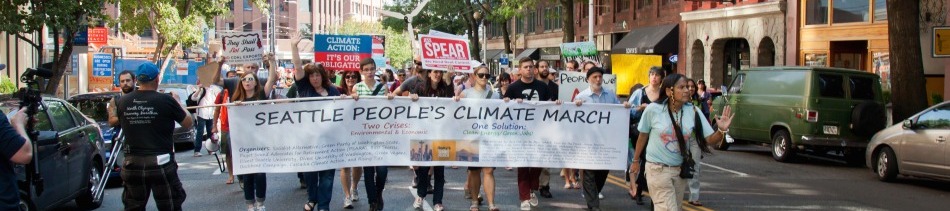
    Cascadia Climate Action aggregates all upcoming climate events into a one-stop-shop calendar that makes it easy to find something that fits your time and interests.  From family friendly festivals and climate science talks to planning meetings, marches, and agency hearings, there is something for everyone.

    Five years ago, the need for a comprehensive calendar was clear — there was no one place to check for what was happening, when something was happening, and where; or to easily pick among the various upcoming events for the one that best fit a person’s interest, values, skills, and community.  To fill this need, Cascadia Climate Action began maintaining a climate events calendar in about 2014, with the overarching goal of facilitating public engagement in climate action.  From it has grown a website, a newsletter, and events such as the popular Climate Science on Tap series – all accomplished with volunteers, interns, and community collaboration.

    For more information about the Calendar, Updates or Climate Scientist events, visit CascadiaClimateAction.org.

    cropped-15146087190_d9efaef2c3_o1-e14162880831121